Wu Bing - The Hidden Ming Playwright
A Great Writer Long Forgotten

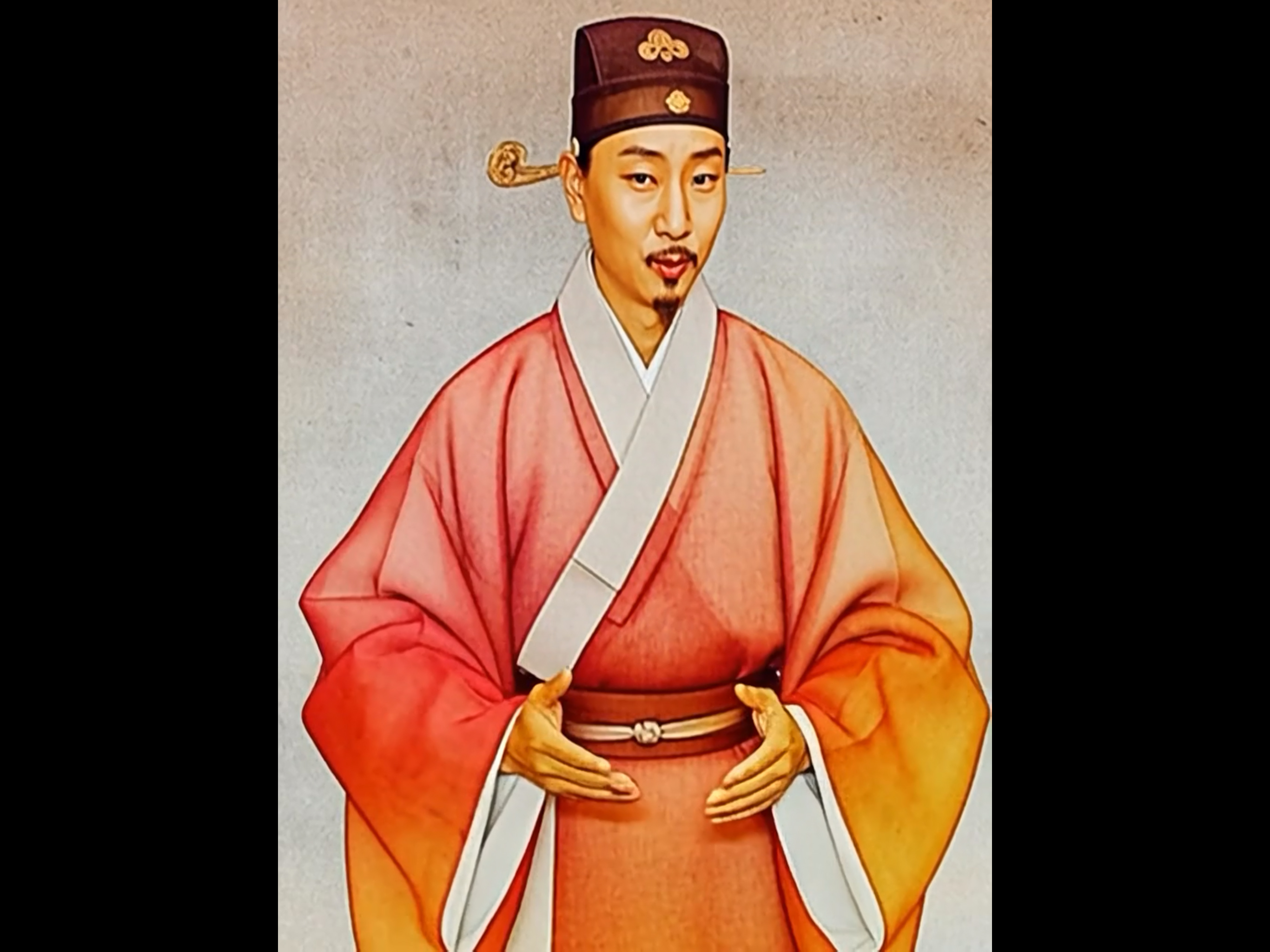
(A completely imaginary portrait of Wu Bing)
By Colin Glassey
One of the pleasures in being an historian is writing about important men and women from the past who have been forgotten. Wu Bing is one such man. He gets only a two line entry in Tang Ye’s Historical Dictionary of Chinese Theater and there is no entry for Wu Bing in the English Wikipedia. I consider Wu Bing to be one of the major writers of the Ming Dynasty and a man with an interesting life story. I wrote about him in an earlier essay but today I’m going to fill out his biography and talk about some of his operas.
See: Wu Bing (Chinese Wikipedia entry) & Wu Bing (Baidu entry)
Wu Bing (1595-1648)
Wu Bing, was younger than the other major late Ming writers - Feng Menglong, Ling Mengchu, & Ruan Dacheng - but he was remarkably successful in the Imperial Exam, becoming a Jinshi at the very young age of 24, in 1619. His grandfather was a Jinshi and he was born in the cultural heartland of China, on the west shore of Lake Tai in the modern province of Jiangsu. Wu Bing was briefly a member of the Hanlin academy, then a provincial official for six years. Around 1635 he had a serious dispute with the General of the coastal region and he apparently resigned from the Ming government (his career from 1635 to 1644 is unclear).
Wu Bing published five large operas in the years 1640 to 1643. These were written under a nom-de-plum but everyone knew he was the author. Then, in 1644, the rebel Li Zicheng led his army to the gates of Beijing and captured the Ming capital almost instantly, to everyone’s shock. The Chongzhen Huangdi committed suicide and the Manchu army invaded from the north-east. The Ming Dynasty was on the verge of total destruction (and it did collapse).
A new government was set up in the Ming’s secondary capital of Nanjing under the Hongguan Huangdi. It seems that Wu Bing had no role in this government, he may have felt - as many other Ming officials did - that the government in Nanjing was led by unworthy men and so he did not wish to work for it. Or perhaps he did join the Nanjing government and this information has been lost. Regardless, the government in Nanjing lasted only a year.
The Manchu, under Prince Dorgon, swiftly defeated Li Zhicheng’s army and then they captured Beijing with a fight. They continued to capture northern Chinese cities with great speed, while the Nanjing government made plans and issued issued orders to little effect. In May of 1645, the city of Yangzhou was captured by the Manchu and the population was massacred. Fear completely demoralized the Hongguan Huangdi and he fled Nanjing just three days after news reached him in early June, 1645. He was then handed over to the Qing army a month later.
Wu Bing did take a position in the government of the Longwu Huangdi. Wu Bing was briefly in charge of education in the province of Jianxi. However, Longwu’s government was too weak and disorganized to fend off the Qing attack and Longwu himself was captured in October of 1646.
Wu Bing then joined the new government of the last Ming Huangdi: Yongli. Wu Bing was the Minister of Rites, and the tutor in charge of educating Yongli’s eldest son. However, the Qing army was relentless and both the prince and Wu Bing were captured by Manchu forces near Canton in the fall of 1648. Wu Bing committed suicide a few days later, rather than submit to the Qing. He was 53 years old.
Wu Bing’s Operas
The Green Peony (綠牡丹 Lu Mudan)
This opera is about an older scholar-official who has a beautiful and well educated daughter named Wan-er. He wants to marry her to a man with real talent, so he invites three young scholars to his home and asks that they compose a poem about a green peony. Now the green peony didn’t exist in Ming China but it was said to be rare and beautiful. The three men return to their residences to work on their poems.
One man convinces his friend named Xie Ying to wrote a poem. The second man convinces his sister, Jingfeng, to write a poem. The third man, Gu Can wrote his own poem. A few days later, the completed poems are presented to the scholar and everyone gets a chance to read the three poems. Xie Ying reads the poem written by Jingfeng and immediately suspects - correctly - that the poem was written by a talented woman. Meanwhile Jingfeng reads Xie Ying’s poem and is very impressed, she suspects - again correctly - that the true author is not the man who claimed to write it. As for Gu Can, his poem is rated in last place by Wan-er’s father, though Wan-er likes it (and like Gu Can).
With suspicions raised as to who actually wrote the poems, a new poem is requested from the three suitors, written on the premises, to avoid any cheating. The two fakers simply escape the house, while Gu Can writes another poem. There are more complications but the end is that Gu Can marries Wan-er and Xie Ying marries Jingfeng.
Note 1: This story is partly based on events in Wu Bing’s life. In 1616, Wu Bing passed the Provincial Exam and became a Juren at the age of 21. For reasons that make no sense to me, the Ministry of Rites rejected Wu Bing’s certification as a Juren and refused to allow him to sit for the Capital Exam, held in Beijing. The next year, Wu Bing went to Beijing, and sat for a special exam conducted by the Ministry of Rites, and proved that he had mastered the material, so he was granted the Juren degree. Two years later he took the Capital Exam and passed it, becoming a Jinshi.
Note 2: For a detailed summary of the plot of the Green Peony, see Professor Linh Chih-ying’s essay “Using Drama as a Weapon: The Writing and Adaptation of the Legendary Play Green Peony by Wu Bing”. 2012).
Note 3: Wu Bing had at least one daughter and it is highly likely that she was well educated. It is also a certainty that Wu Bing received a number of marriage proposals from other scholars who wanted their sons to marry his daughter. It is a fact that Wu Bing’s daughter married the top ranked scholar (Jinkui) in his province. My guess is that Wu Bing engaged in some testing of potential husbands for his daughter and then he wrote a comic opera about the affair.
Note 4: This theme of testing would-be suitors for a scholar’s daughter is found in Feng Menglong’s story Three Times Su Xiaomei Tests Her Groom, (story 11 in Stories to Awaken the World, 1627). That story by Feng Menglong appears to be a pure invention on his part as Su Shi had no known sister. It is quite likely that Wu Bing knew Feng Menglong’s stories and they may even have met, as Feng Menglong joined the Ming government in 1634 (at the age of 60, when he was already well known as a writer).
Final Note: There is a Chinese novel-opera with the exact same name: Green Peony (Lu Muden). This novel-opera dates from around 1830 and is a wuxi story, set in the Tang dynasty, written by an unknown author. This second Green Peony has absolutely no relation to Wu Bing’s opera. Unfortunately, the fact that there are two novel-operas with the same name, and the fact that Wu Bing is not well known means that he is often mistakenly connected to the 1830s wuxi opera.
The Broth that Cures Jealousy (療妒羹 Liao Du Geng)
Liao Du Geng (a Baidu entry)
This opera is fairly well known today in China, based on one act from the opera that entered the cannon of famous acts.
The opera is about two rich couples Yang and Chu. Both are in their late 30s, both are childless. Mr. Chu decides to obtain a second wife, and so he buys a young woman named Xiaoqing, who had been working for a short time as courtesan. Mrs. Chu becomes very jealous of Xiaoqing and works to get rid of her, despite the fact that her husband has every right to marry a second woman when his first wife is childless.
The second couple, the Yang, are in the same position as the Chu, but Ms. Yang is fully supportive of her husband’s wish to bring a second wife into the household. The problem is: they want to find the perfect 2nd wife and finding that woman proves difficult. One day, Ms. Yang meets Xiaoqing at the Chu house and she thinks “This is the right girl, but she is already part of the Chu family. What to do?”
Ms. Yang gives Xiaoqing a book, the text of the popular opera The Peony Pavillon by Tang Xianzu (written in 1598, Tang died in 1616, so it is unlikely that Wu Bing ever met him). Xiaoqing reads the opera, is touched by it, and writes some comments of her own in the book.
Note: This element of the story supports my theory that Ming litterary operas (wen ren chuanqi) were essentially novels, not dramas. They were read as books, people didn’t see them performed.
When Ms. Yang gets the book back, she sees the comments, and shows them to her husband and they both agree that this is the woman they would like to add to their family. However, getting Xiaqing remains a problem.
Note: Why not simply ask Mr. Chu to divorce Xiaoqing? The Yang have money, and Mrs. Chu really wants Xiaoqing out of the house. Seems like an obvious resolution to the problem but apparently such a request would have been improper in late Ming China.
The opera continues as Xiaoqing is sent away to an island by Mrs. Chu and then Mrs. Chu has a poisoned soup delivered to the island, with the intent that Xiaoqing will drink the soup and die. This is apparently the meaning of the title of the opera: the soup that cures jealousy is a soup that kills the younger wife.
Note: We see this same story play out in the famous novel The Dream of the Red Chamber. In chapters 64-70, Jia Liang’s jealous wife Xi-feng uses all of her formidable intellect to kill her husband’s new wife. See this essay and this one about that sequence of events.
As it happens, the poisoned soup is intercepted by a new friend of Xiaomei and she does not die. Instead, she is declared dead, and that - obviously - frees her from her marriage to Mr. Chu. Soon after, she is brought into the Yang family and they all get along very well. Later, both women get pregnant and give birth to healthy children.
In the last scenes of the opera, Mr. and Mrs. Chu visit the Yang family to congratulate them on the birth of their children and at this point they realize that Xiaomei isn’t dead. Mrs. Chu is beaten by her husband for her attempted murder of Xiaomei.
Note 1: Mr. Chu legally could have killed his wife for her attempted murder of Xiaomei - and everyone knows this. At the end of the opera, Xiaomei actually begs Mr. Chu to spare Mrs. Chu’s life.
Note 2: There is a story by Ling Mengchu which serves as a counter-point to this story. It’s titled Li Kerang Sends a Blank Letter & Liu Yuanpu Begets Two Precious Sons. The story is #20 in Ling Mengchu’s first collection Slapping the Table in Amazement (1628). It is one of my favorite stories by Ling Mengchu.
Other Operas by Wu Bing
The Figure in the Painting (畫中人 Hua Zhong Ren). A man visits a mansion of a wealthy family and meets a charming young woman. Later he learns the daughter of the wealthy man died and he - mistakenly - assumes that the girl he met is now dead. Instead it turns out that he met a girl of the same age but she was a relative who was just visiting. He is asked to marry the living girl, but he thinks she is dead and it deeply unhappy about getting married to a ghost (quite rational on his part, except he is utterly wrong about a rather important fact!).
Romance at the Post House (情郵記 Qingyou Ji). The Grand Secretary seeks a beautiful secondary (or tertiary) wife from a group of eligible young women. A junior official, Wang Ren is asked to present his daughter as a candidate but he substitutes his daughter’s maid, Jia Zixiao in place of his own daughter. This starts a complex plot.
The Story of the West Garden (西園記 (Xi Yuan Ji) West Garden (Baidu entry)